Honey Hunters of Nepal: How Mad Honey Is Harvested
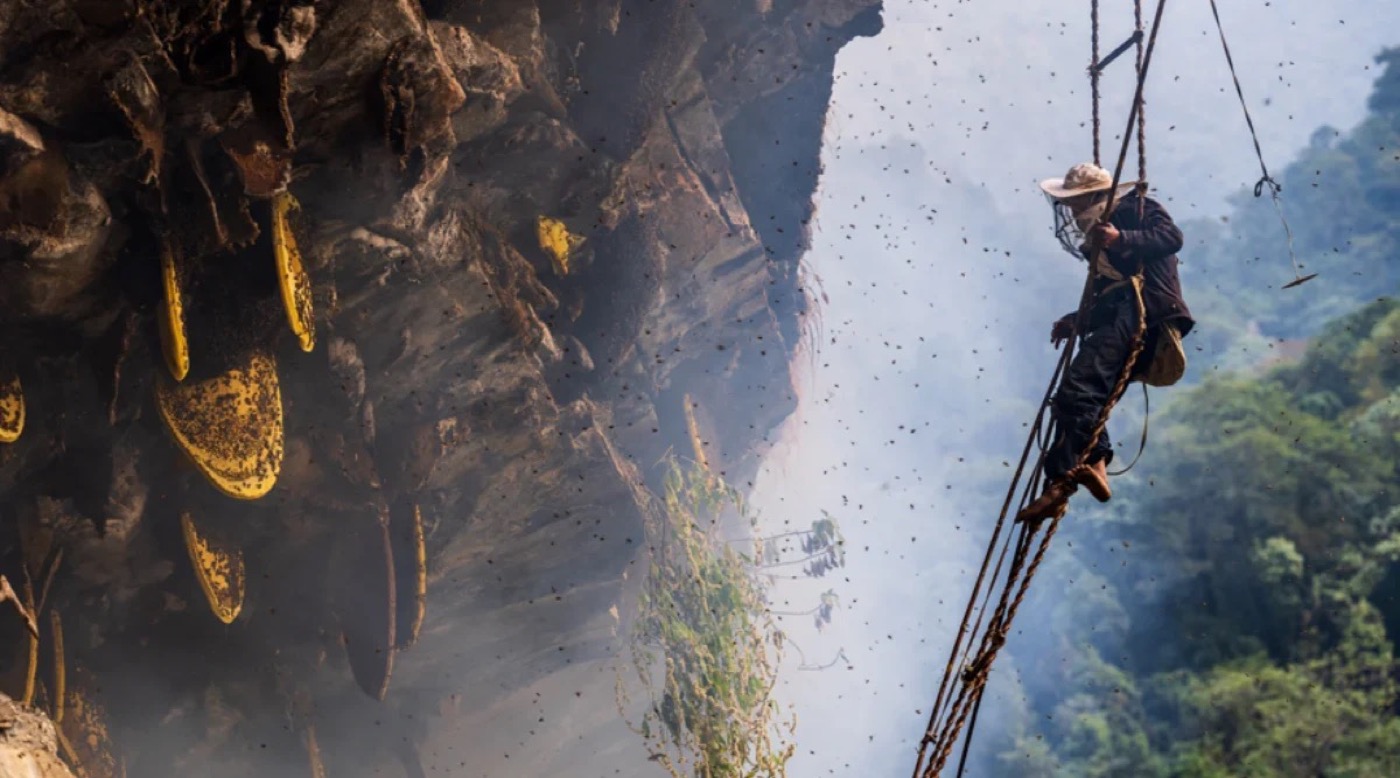
Mad honey is harvested by hand by Nepal’s Gurung honey hunters, who climb rope-and-bamboo ladders down sheer Himalayan cliffs to reach the hives of the world’s largest honeybee, Apis dorsata laboriosa. Using smoke to calm the bees, they cut the honeycomb from the rock face — a dangerous, seasonal tradition practiced for centuries.
This is the story behind every authentic jar, and it’s the reason real mad honey is so rare.
How do bees make mad honey?
Bees make mad honey by collecting nectar from wild rhododendron flowers, whose grayanotoxins pass into the honey. The giant Himalayan cliff bee builds huge exposed combs on high rock faces, and when rhododendrons bloom in spring, the resulting honey carries the psychoactive compound.
So the “madness” comes from the flowers, not the bees — the same bees make ordinary honey when foraging other plants.
Who are the Gurung honey hunters?
The Gurung are an Indigenous community of Nepal’s central hills for whom cliff honey hunting is a centuries-old cultural tradition, passed down through generations. Harvests are communal events wrapped in ritual, skill, and deep local knowledge of the mountains.
Their expertise — reading the cliffs, the bees, and the season — is what makes safe harvesting possible at all.
How is mad honey actually harvested?
Harvesting involves descending a long handmade ladder down a cliff, using smoke from burning grasses to drive bees off the comb, then cutting the honey-laden sections into baskets lowered by rope. It takes a coordinated team and hours of work at dangerous height.
It happens roughly twice a year, tied to the rhododendron bloom — which is why supply is limited and seasonal.
What makes mad honey sourcing ethical?
Ethical mad honey sourcing means fair pay to the harvesting communities, sustainable harvest levels that don’t destroy the bee colonies, and transparency about origin. Because these are wild bees on wild cliffs, responsible harvesting protects both the tradition and the ecosystem.
Buyers can support this by choosing sellers who source directly and disclose their supply chain.
Frequently asked questions
How often is mad honey harvested? Usually twice a year, tied to the rhododendron bloom seasons.
Is mad honey harvesting dangerous? Yes — hunters work at great height on handmade ladders with agitated giant bees. It’s genuinely risky.
Are the bees harmed? Sustainable harvesting leaves colonies able to recover; over-harvesting is the real ecological concern.